
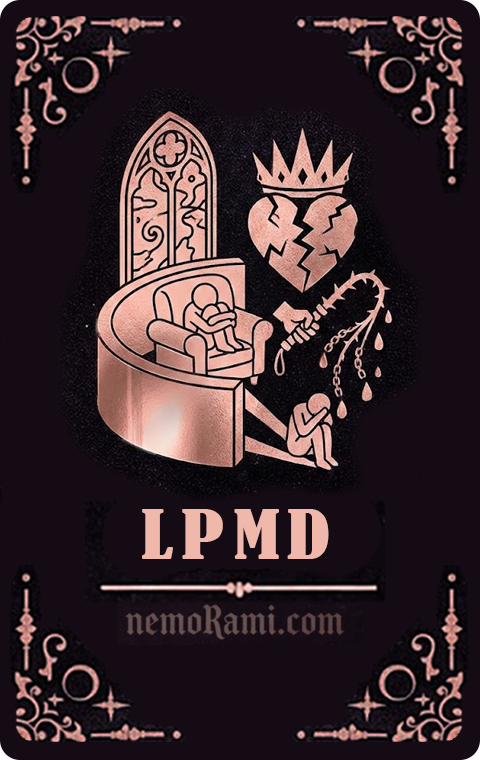
Here's the order you chose to handle things!
In a moment of crisis, you held the crying Baby first, answered the important Phone call next, took care of the Rice after that, and opened the Bell last.
"The person who put the other person on trial because of their own wounds."
You want love more desperately than most. The problem is that the way you feel love tilts less toward mutual connection and more toward proof and confirmation of devotion.
Maybe I did not want to be loved. Maybe I wanted to be proven to, all the way to the end. The problem is that the more I demand that proof, the faster exhaustion piles up instead of love.
Your Love
You are not someone who treats love lightly.
Once you let someone in deeply, you cannot end things easily, and you strongly demand sincerity and full emotional investment inside the relationship.
You want a relationship where you are clearly chosen, not one where affection lingers in a half-hearted, ambiguous state.
That is why uncertain affection is especially hard for you to bear.
You want love, and at the same time, you want proof that that love will not shake.
But your love often moves together with past wounds.
Old pain, memories of being ignored, and moments when you were pushed aside keep following you into the present relationship.
So instead of seeing the person in front of you as they are, you sense their potential to leave first.
Because you want to be reassured and chosen to the very end, you keep testing them.
To you, it is an expression of anxiety.
To them, it can feel like pressure and control.
You are not someone with too much emotion.
You are someone who is so afraid of losing love that you end up using your wounds as a weapon.
The Pattern You Repeat
When hurt builds up, you do not always say it directly.
Instead, you hope the other person will just know.
Disappointment becomes a test, and affection becomes an issue of proof.
Thoughts like, “If you really love me,” “I am having this hard a time,” and “This time, you need to show me,” start to stack up inside the relationship.
You wanted to be understood, but that feeling gradually turns into a way of pressuring the other person.
In the end, conversation stops being connection and becomes judgment.
Love stops being something shared and starts to feel like a submission of devotion.
The Choice You Regret
You may have often felt wronged.
You may have felt like you were always the one who got hurt more.
That is why even in moments when you could have said you were sorry, part of you wanted to win first.
In the place where you wanted understanding, you demanded surrender.
In the place where you wanted love confirmed, you cornered the other person.
At the time, you believed you were not wrong.
But later, one regret remains clear: even if I may have been right, that victory did not save the relationship.
LPMD’s biggest regret is the moment it broke trust by choosing victory over apology.
task_alt What You Need Right Now
- • Before turning hurt into a test, say directly what you want
- • Learn the difference between explaining a wound and controlling someone through that wound
- • When the urge to win rises up, ask yourself first whether you want victory or connection
Connections Linked to You
A type whose way of handling my emotions for me can feel like short-term stability
A type where the need for centrality and superiority locks together with mine, creating built-in power struggle
A type whose habit of avoiding emotion or smoothing it over with words feels like disregard
A type where devotion mutates into moral superiority and guilt-based control, creating endless entanglement
Share this with a friend and compare your desire order! It can be the first step toward understanding yourself.


